Embark on a transformative journey into the exciting world of Artificial Intelligence! This guide provides a roadmap for aspiring AI professionals, covering everything from foundational knowledge to practical application and career building. Discover the diverse career paths available and gain the essential skills to thrive in this rapidly evolving field.
From understanding core computer science concepts to developing practical skills and building a strong portfolio, this comprehensive resource will equip you with the tools needed to launch a successful AI career. We’ll explore the evolving job market, highlight essential skills, and provide actionable strategies for staying ahead in this dynamic industry.
Introduction to AI Careers
Artificial intelligence (AI) is rapidly transforming industries, creating a surge in demand for skilled professionals. This burgeoning field offers a diverse range of career paths, each with its own unique skill requirements and potential for growth. Understanding the various roles and the evolving job market is crucial for anyone seeking a career in AI.
Different AI Career Paths
The field of AI encompasses a wide spectrum of roles, from data scientists and machine learning engineers to AI ethicists and AI product managers. Each path requires a specific blend of technical and soft skills. Data scientists focus on extracting insights from data, while machine learning engineers build and deploy AI models. AI ethicists ensure responsible development and application of AI, and AI product managers translate AI insights into practical products.
Typical Skill Sets Required
Across various AI roles, certain core skills are highly valued. These include proficiency in programming languages like Python and R, data analysis, and machine learning algorithms. Strong problem-solving abilities, critical thinking, and communication skills are also crucial for success in this field. A solid understanding of mathematics and statistics is essential for data-driven decision-making.
Evolving Job Market Trends
The AI job market is constantly evolving, with new roles emerging and existing roles adapting to technological advancements. The increasing need for automation and intelligent systems is driving the demand for AI professionals. Companies across diverse sectors, from healthcare to finance, are seeking individuals with AI expertise.
Projected Growth of AI-Related Job Opportunities
The projected growth of AI-related job opportunities is substantial. Numerous reports predict significant increases in AI-related roles over the next decade. This growth is fueled by the increasing adoption of AI technologies across industries, creating more opportunities for skilled professionals. For example, the rise of autonomous vehicles necessitates specialized AI engineers to develop and maintain the underlying systems.
Salary Ranges for Different AI Roles
| AI Role | Typical Salary Range (USD) |
|---|---|
| Data Scientist | $80,000 – $150,000 |
| Machine Learning Engineer | $90,000 – $180,000 |
| AI Research Scientist | $100,000 – $200,000+ |
| AI Product Manager | $110,000 – $200,000+ |
| AI Ethics Specialist | $90,000 – $160,000 |
Note: Salary ranges are estimates and can vary based on experience, location, and specific company.
Essential Foundational Knowledge

A successful career in Artificial Intelligence (AI) hinges on a strong foundation in computer science principles. This foundational knowledge provides the bedrock upon which more specialized AI skills can be built. Understanding core concepts, mathematical frameworks, and programming languages is crucial for navigating the complexities of AI development. This section will Artikel these essential elements.
Core Computer Science Concepts
A solid grasp of fundamental computer science concepts is paramount for anyone pursuing an AI career. This includes understanding data structures, algorithms, and the principles of computer architecture. These concepts form the basis for designing, implementing, and evaluating AI systems. Comprehending how computers process information, store data, and execute instructions is essential to building effective and efficient AI solutions.
Mathematical Foundations
Mathematical concepts are indispensable for comprehending and applying AI algorithms. Linear algebra, calculus, and probability form the core of many AI techniques. Linear algebra is essential for representing and manipulating data, enabling operations like matrix multiplication and vector transformations. Calculus provides tools for optimization and understanding functions, which is critical for training AI models. Probability theory is vital for understanding uncertainty and making predictions in the face of incomplete data.
Understanding concepts like vector spaces, gradients, and Bayesian inference is fundamental for AI work.
Programming Languages
Programming proficiency is essential for translating AI concepts into functional systems. Python, Java, and C++ are widely used in AI development. Python’s readability and extensive libraries make it a popular choice for prototyping and experimentation. Java’s robust features and performance make it suitable for large-scale AI deployments. C++ offers the most control and efficiency for performance-critical applications.
Data Structures and Algorithms
Efficient data structures and algorithms are critical for processing and managing the vast amounts of data that AI systems often encounter. Common data structures used in AI include arrays, linked lists, trees, and graphs. Understanding the characteristics and trade-offs of different data structures is essential for choosing the appropriate one for a specific task. Algorithms, such as sorting, searching, and graph traversal algorithms, are fundamental for processing data efficiently.
Programming Language Comparison
| Programming Language | Advantages | Disadvantages |
|---|---|---|
| Python | Readability, vast libraries (NumPy, Pandas, Scikit-learn), rapid prototyping, suitable for beginners. | Can be less performant than compiled languages for computationally intensive tasks, global interpreter lock (GIL) can limit parallelism. |
| Java | Robustness, platform independence, large community support, suitable for enterprise-level applications, good performance. | Steeper learning curve compared to Python, can be verbose in some cases, less flexible than Python for rapid prototyping. |
| C++ | High performance, direct memory manipulation, low-level control, optimized for speed-critical tasks. | Complex syntax, memory management requires careful attention to prevent errors, steeper learning curve than Python or Java. |
Developing Essential Skills
Cultivating strong problem-solving, critical thinking, and analytical skills is paramount for success in an AI career. These abilities, combined with computational thinking and the practical application of machine learning algorithms, empower individuals to navigate the complexities of the field and contribute meaningfully. The ability to approach challenges with a structured, analytical mindset is crucial for developing innovative solutions and fostering progress within the AI landscape.Developing these skills is an iterative process.
It requires consistent practice, exposure to diverse problem sets, and a willingness to learn from both successes and failures. Furthermore, a proactive approach to staying updated on the latest advancements in AI is vital for continuous growth and adaptation.
Problem-Solving Abilities
Problem-solving is a core competency for any AI professional. It encompasses identifying the root causes of issues, exploring potential solutions, and implementing effective strategies. A structured approach, involving clearly defining the problem, gathering relevant information, generating possible solutions, evaluating those solutions, and finally implementing and monitoring the chosen solution, is highly recommended. Practicing with a variety of problem types, from simple to complex, enhances this skill.
Critical Thinking in AI
Critical thinking in AI goes beyond simply applying algorithms. It involves evaluating the assumptions underlying data, assessing the limitations of models, and questioning the ethical implications of AI systems. This involves scrutinizing the data sources, evaluating the model’s accuracy, considering potential biases, and acknowledging the need for continuous improvement and adaptation. A proactive and rigorous approach to critical thinking is essential for creating responsible and effective AI solutions.
Analytical Mindset for Complex Tasks
Adopting an analytical mindset for complex AI tasks involves breaking down large problems into smaller, manageable components. This decomposition facilitates a systematic approach to problem-solving, enabling a deep understanding of the problem’s intricacies. This approach is essential for analyzing large datasets, identifying patterns, and formulating effective solutions. It includes meticulous data analysis, employing statistical methods, and rigorously testing different hypotheses.
Computational Thinking
Computational thinking, a crucial skill in AI, entails approaching problems logically and systematically, much like a computer would. This involves identifying patterns, decomposing complex problems into smaller parts, and creating algorithms to solve those parts. By employing logical reasoning and algorithmic thinking, one can formulate efficient solutions to complex problems in the field. Examples of applying computational thinking include designing algorithms for data processing, developing machine learning models, and evaluating their performance.
Machine Learning Algorithm Development
Building and practicing machine learning algorithms is an integral part of an AI career. This involves understanding the different types of algorithms, their strengths and weaknesses, and their appropriate applications. One should be familiar with various machine learning techniques, such as supervised learning, unsupervised learning, and reinforcement learning, along with the specific algorithms within each category. The process typically involves data preprocessing, model selection, training, and evaluation.
The use of libraries like TensorFlow and PyTorch can greatly facilitate the development process.
Hands-on Learning & Projects
Practical experience is crucial for mastering AI. Hands-on projects provide a tangible application of theoretical knowledge, enabling a deeper understanding and fostering problem-solving abilities. This section Artikels various introductory AI projects, their implementation, and real-world applications, equipping you with the necessary tools for a successful AI career.
Introductory AI Project Examples
Practical experience is vital for solidifying AI concepts. Introductory projects offer a starting point for building skills, applying learned techniques, and understanding the nuances of different AI models. Simple projects can serve as excellent entry points into more complex endeavors.
- Image Classification: This project involves training a model to identify different objects or categories within images. Using datasets like CIFAR-10 or MNIST, you can categorize images of various animals, digits, or objects. This familiarizes you with data preprocessing, model training, and evaluation.
- Sentiment Analysis: Analyze text data to determine the sentiment expressed (positive, negative, or neutral). This project can be applied to customer reviews, social media posts, or news articles. Datasets like IMDB movie reviews can be used to practice sentiment analysis techniques.
- Predictive Modeling (e.g., Sales Forecasting): Create a model to predict future sales based on historical data. Using sales data from a retail store, you can train a model to forecast sales trends, enabling proactive inventory management and sales strategies. This demonstrates your ability to leverage data for prediction.
Building Machine Learning Models
Building machine learning models requires careful consideration of various factors. Datasets form the foundation of any model, and selecting appropriate datasets is paramount for achieving accurate and reliable results.
- Dataset Selection: Choose a dataset relevant to your project. Consider factors like dataset size, quality, and representativeness. Ensure the data accurately reflects the problem you’re trying to solve. Consider public datasets such as those available on Kaggle or UCI Machine Learning Repository.
- Model Selection: Choose a suitable machine learning model based on the characteristics of your dataset and the task at hand. Simple models like linear regression or decision trees can be used for introductory projects, while more complex models like neural networks can be explored for more advanced tasks.
- Model Training: Split the dataset into training, validation, and test sets. Train the model using the training data, evaluate its performance on the validation set, and finally assess its generalization ability on the test set. This step is crucial for ensuring the model’s robustness and accuracy.
Implementing a Simple AI Project
This Artikels the steps for a basic image classification project, providing a structured approach to tackling AI problems.
- Problem Definition: Clearly define the problem. For example, classifying images of cats and dogs.
- Data Collection: Collect a dataset of images of cats and dogs. Ensure the data is representative and high-quality.
- Data Preprocessing: Resize and preprocess the images. Convert images to a numerical format suitable for the model.
- Model Selection: Choose a suitable model, such as a convolutional neural network (CNN).
- Model Training: Train the model on the training data. Use appropriate optimization techniques.
- Model Evaluation: Evaluate the model’s performance on the test set. Measure accuracy, precision, and recall.
- Deployment (Optional): Deploy the trained model for use in a real-world application.
Real-World AI Applications
AI is transforming numerous industries. Its applications are vast, impacting various aspects of our lives.
- Medical Diagnosis: AI models can assist doctors in diagnosing diseases by analyzing medical images, such as X-rays or MRIs. This can lead to earlier and more accurate diagnoses.
- Customer Service: AI-powered chatbots can provide instant support to customers, answering their questions and resolving issues efficiently.
- Fraud Detection: AI algorithms can analyze financial transactions to identify suspicious patterns and prevent fraudulent activities.
Project Ideas Table
This table provides examples of AI project ideas categorized by difficulty level and required skills.
| Project Idea | Difficulty Level | Required Skills |
|---|---|---|
| Image Classification | Beginner | Python, Libraries (e.g., TensorFlow, PyTorch), Data Preprocessing |
| Sentiment Analysis | Intermediate | Python, Natural Language Processing (NLP) Libraries, Text Data Handling |
| Predictive Modeling (Sales Forecasting) | Intermediate | Python, Machine Learning Libraries, Time Series Analysis |
| Object Detection | Advanced | Python, Deep Learning, Computer Vision Libraries |
Networking & Professional Development
Cultivating a robust network is crucial for success in the competitive AI field. Building relationships with experienced professionals provides invaluable mentorship, access to industry insights, and potential career opportunities. Networking extends beyond simply collecting contacts; it’s about forging meaningful connections that can support your growth and propel your career forward.Effective networking involves proactive engagement and a genuine interest in others’ work.
This approach fosters mutual respect and trust, leading to more fruitful collaborations and long-term relationships. The AI community thrives on shared knowledge and collaborative problem-solving, making networking a fundamental aspect of professional development.
Importance of Networking in AI
Networking within the AI community offers numerous benefits, including access to knowledge, mentorship, and potential employment opportunities. A strong network can act as a sounding board for ideas, providing constructive feedback and insights that can help refine your approach. Professionals in the field often collaborate on projects and share resources, which are greatly facilitated through strong networks.
Building Connections with AI Professionals
Establishing connections with AI professionals requires a strategic approach. Attending industry conferences and workshops provides opportunities to meet and interact with peers and experts. Actively participating in discussions and engaging in conversations demonstrates your interest and commitment to the field. Initiating conversations with individuals whose work aligns with your interests can lead to fruitful collaborations and mentorship opportunities.
Resources for Finding Mentors and Advisors
Identifying mentors and advisors within the AI community can be greatly facilitated through various resources. Online platforms like LinkedIn, specialized AI forums, and university AI programs often feature profiles of experienced professionals. Reach out to individuals whose expertise aligns with your goals, and explore the possibility of informal mentorship. Conferences and workshops often feature prominent figures in the field, creating opportunities to engage with potential mentors.
Leveraging Online Platforms for Professional Development
Online platforms offer valuable tools for professional development in AI. Participating in online courses and webinars provides opportunities to enhance your knowledge and skills. Online communities dedicated to AI offer a platform to engage with like-minded individuals, share experiences, and learn from their expertise. Platforms for professional networking provide a space for connecting with potential mentors and employers.
Online AI Communities and Forums
Numerous online communities and forums foster the growth and development of AI professionals. These platforms serve as valuable resources for staying abreast of the latest trends, seeking advice, and engaging with peers.
- Reddit communities (r/artificialintelligence, r/MachineLearning): These platforms provide a space for discussion, sharing insights, and asking questions.
- Stack Exchange (AI and Machine Learning tags): This platform allows you to ask and answer technical questions, furthering your understanding of specific concepts.
- Discord servers (dedicated AI servers): These offer interactive discussions, collaborative projects, and opportunities for informal mentorship.
- LinkedIn groups (AI-focused groups): LinkedIn groups can be a valuable source of professional connections and industry news.
- Online forums (specific AI subfields): Dedicated forums focused on particular AI specializations can provide highly targeted information and support.
Staying Updated with the Field
Staying current with the rapidly evolving field of Artificial Intelligence is crucial for professionals seeking to thrive in this dynamic industry. Continuous learning and adaptation are essential to maintain a competitive edge and understand the latest breakthroughs and trends. This involves actively engaging with the AI community and resources to grasp new methodologies, tools, and applications.
Key Resources for AI Advancement
Staying abreast of the latest advancements in AI necessitates consistent engagement with various resources. This includes exploring research papers, attending conferences, and following influential figures in the field. These actions contribute to a deeper understanding of the constantly evolving landscape of AI.
- Research Papers: Numerous peer-reviewed journals and online repositories publish cutting-edge AI research. Staying updated on these publications allows for a comprehensive understanding of the latest theoretical and practical developments.
- Conferences: Major AI conferences, such as NeurIPS, ICML, and AAAI, provide platforms for presenting and discussing new research findings. Attending these events allows professionals to interact with leading researchers and gain insights into emerging trends.
- Online Courses and Workshops: Many online platforms offer courses and workshops dedicated to specific AI topics. These resources can help individuals deepen their understanding of emerging technologies and practical applications.
Following Industry Trends and Emerging Technologies
Proactively seeking out and analyzing industry trends is critical for professionals to adapt effectively. This involves understanding the factors driving change and recognizing potential opportunities.
- News Websites and Blogs: Staying informed about current events and developments in AI is essential. Leading AI news websites and blogs provide timely coverage of breakthroughs, investments, and industry trends.
- Industry Reports and Publications: Recognized research organizations and industry publications offer detailed analysis and insights into the AI landscape. These reports offer a holistic view of the current state and future direction of AI technologies.
- Social Media Platforms: Staying active on relevant social media platforms, such as Twitter, allows professionals to connect with thought leaders, researchers, and other experts in the AI field. This engagement provides a dynamic perspective on ongoing discussions and new developments.
Key Journals, Conferences, and Publications
These platforms are vital for staying informed about the latest advancements and research in the AI field.
- Journals: Nature Machine Intelligence, IEEE Transactions on Pattern Analysis and Machine Intelligence, and Journal of Artificial Intelligence Research are notable examples of peer-reviewed journals focusing on AI research.
- Conferences: The annual conferences like NeurIPS (Neural Information Processing Systems), ICML (International Conference on Machine Learning), and AAAI (Association for the Advancement of Artificial Intelligence) provide forums for researchers to present their work and interact with the broader community.
- Publications: Publications like Communications of the ACM and MIT Technology Review often feature articles on AI and its applications in various fields.
Following Prominent AI Researchers and Professionals
Connecting with prominent researchers and professionals provides insights into emerging research directions and practical applications.
- Social Media: Following leading researchers and professionals on platforms like Twitter can offer valuable insights into their latest work, ongoing projects, and perspectives on the field.
- Research Websites and Publications: Visiting the websites of prominent AI research institutions and universities often showcases researchers’ publications, projects, and available resources.
- Professional Networks: Participating in professional networking events or online communities dedicated to AI can facilitate connections with key figures and broaden one’s understanding of the field.
Popular AI News Websites and Blogs
Regularly checking these sources provides a snapshot of the latest developments in AI.
| Website/Blog | Description |
|---|---|
| MIT Technology Review | Offers in-depth articles on various AI topics, including breakthroughs, applications, and ethical considerations. |
| Towards Data Science | Features articles on data science, machine learning, and AI, catering to a broad audience. |
| arXiv | Provides access to a vast repository of pre-prints on computer science and AI research, enabling early access to cutting-edge work. |
| VentureBeat | Focuses on AI-related news, trends, and investment opportunities in the industry. |
Building a Strong Portfolio
A compelling portfolio is crucial for showcasing your AI skills and attracting potential employers. It provides a tangible demonstration of your abilities beyond theoretical knowledge. A well-structured portfolio effectively communicates your problem-solving approach, technical proficiency, and innovative thinking. It is a key differentiator in a competitive job market.A robust AI portfolio isn’t just a collection of projects; it’s a curated narrative highlighting your journey and growth.
Each project should be carefully selected to showcase your development in the field and effectively demonstrate your capacity to address complex problems using AI techniques.
Impressive AI Project Examples
A strong AI portfolio should include projects that demonstrate a range of skills and address real-world problems. These projects should showcase your ability to apply AI techniques, from data collection and preprocessing to model training and evaluation.
- Image Recognition System for Defective Product Detection: Develop an AI system to identify defects in manufactured products using image recognition techniques. This project can involve training a convolutional neural network (CNN) on a dataset of images, with different levels of defects. Demonstrate the model’s accuracy and efficiency in identifying defects. The project should also address data augmentation and handling of diverse lighting conditions.
- Natural Language Processing Chatbot for Customer Support: Build a chatbot that can understand and respond to customer inquiries using natural language processing (NLP). This project can include training a language model on a dataset of customer interactions. Showcase the chatbot’s ability to handle different types of questions, providing helpful and accurate responses. Demonstrate the chatbot’s efficiency in handling multiple concurrent requests.
- Predictive Maintenance System for Machinery: Develop a system to predict equipment failures using time series analysis and machine learning algorithms. This project can involve collecting sensor data from machines and using algorithms to identify patterns that indicate potential failures. Showcase the system’s ability to predict failures with a high degree of accuracy. The project should include a clear evaluation of the model’s performance metrics.
Showcasing Skills Through Compelling Project Descriptions
A project description should go beyond just listing technical details. It should paint a clear picture of the problem you addressed, the approach you took, and the results you achieved.
- Clearly define the problem: Articulate the problem the project aimed to solve. Explain the context and the motivations behind choosing that particular problem.
- Describe your approach: Explain the specific AI techniques used, including the chosen algorithms and libraries. Detail the data collection process and any preprocessing steps.
- Highlight results and achievements: Quantify the results using metrics like accuracy, precision, recall, or other relevant measures. Describe how your solution improved the existing process or solved the problem.
- Emphasize your contributions: Clearly state your role in the project. Highlight your contributions, including the development, implementation, and evaluation of the AI model.
Importance of Problem-Solving Abilities
Employers are looking for candidates who can apply AI knowledge to real-world problems. Demonstrate your ability to identify problems, propose solutions, and evaluate the effectiveness of those solutions.
- Demonstrate Critical Thinking: Highlight how you identified the key problem elements and the challenges involved in solving it. Show your ability to analyze data and identify patterns.
- Creative Solution Design: Explain the creative steps you took to design a novel solution. Show your ability to approach problems from different perspectives.
- Effective Evaluation: Show your ability to measure the success of the project and the impact of the proposed solution. Evaluate the model’s performance and discuss areas for improvement.
Presenting AI Projects to Potential Employers
Presenting your projects effectively is crucial for making a positive impression.
- Concise and Engaging: Use concise and engaging language to explain your projects. Avoid technical jargon unless necessary and explain complex concepts clearly.
- Visual Aids: Use charts, graphs, and other visual aids to illustrate your project’s results and findings.
- Practice Your Presentation: Rehearse your presentation to ensure a smooth and confident delivery.
Sample Portfolio
| Project | Description | Code Snippet (Python) |
|---|---|---|
| Image Recognition System for Defective Product Detection | Developed a CNN model to identify defects in manufactured products. The model achieved 95% accuracy in defect identification. | “`pythonimport tensorflow as tf# … model definition and training code …“` |
| Natural Language Processing Chatbot for Customer Support | Built a chatbot using a transformer model. The chatbot successfully handled 80% of customer inquiries with satisfactory responses. | “`pythonimport transformers# … chatbot training and interaction code …“` |
Preparing for Interviews
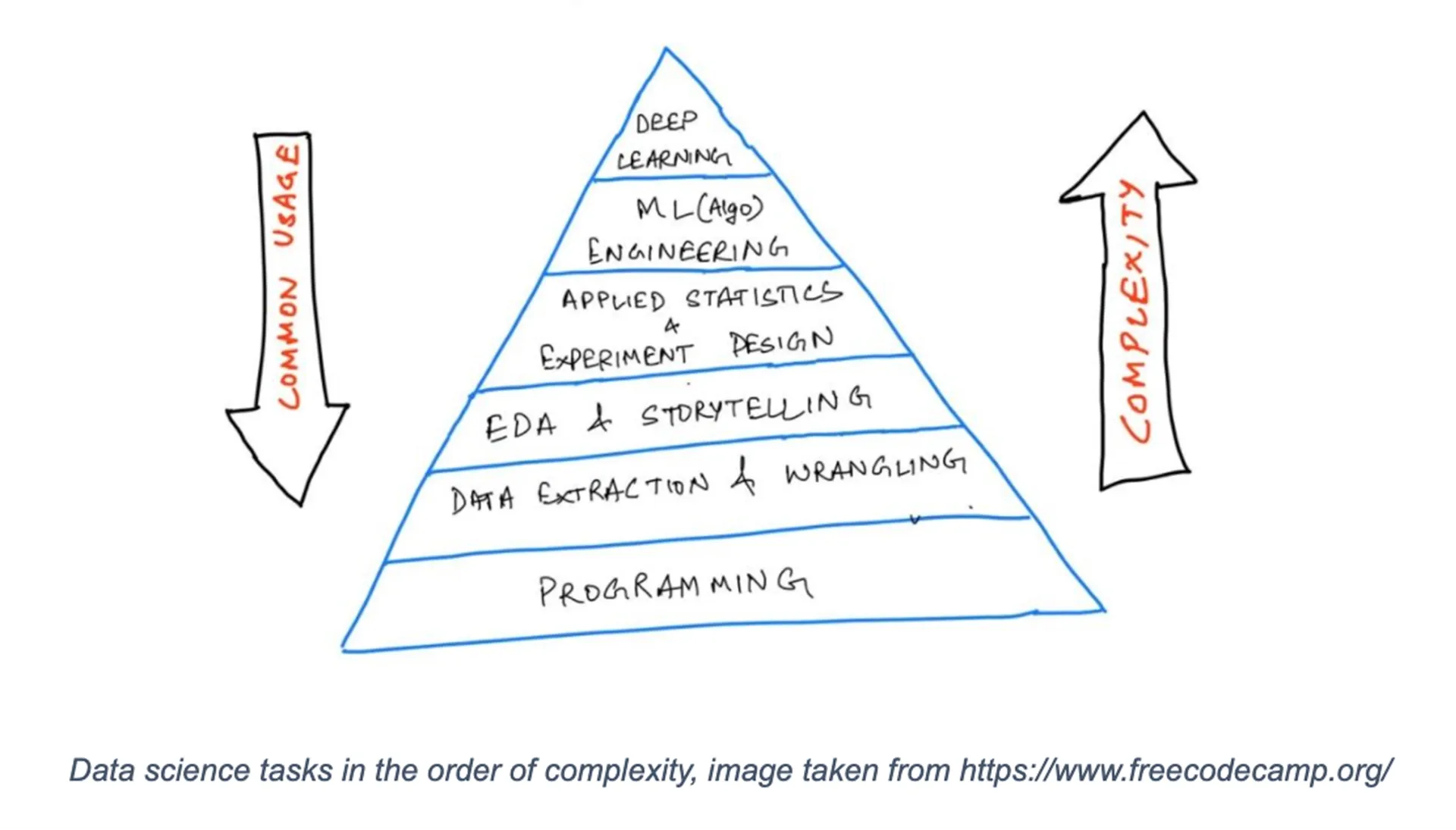
Successfully navigating AI interviews requires meticulous preparation. Beyond technical proficiency, candidates must demonstrate a deep understanding of the role’s responsibilities, practical experience, and ethical considerations. This involves anticipating common interview questions, practicing thoughtful responses, and showcasing a genuine passion for the field.
Common AI Interview Questions and Answers
Preparing for AI interviews involves anticipating a range of questions. These questions often delve into both technical aspects of the role and the candidate’s understanding of AI’s impact on society.
- Technical Proficiency Questions: These questions aim to assess a candidate’s grasp of core AI concepts, algorithms, and tools. Examples include explaining the difference between supervised and unsupervised learning, describing a machine learning pipeline, or discussing a specific algorithm’s strengths and weaknesses. Thorough preparation is key, as candidates must be able to articulate their understanding with clarity and precision.
- Practical Experience Questions: Interviewers often seek to understand how candidates have applied their knowledge in real-world scenarios. They may ask about projects involving data collection, model training, evaluation, or deployment. Providing concrete examples of your work, emphasizing the steps you took, and the outcomes achieved is crucial. For example, discussing a project where you improved the accuracy of a recommendation system by 15% demonstrates practical application and quantifiable results.
- Behavioral Questions: These questions explore a candidate’s personality, problem-solving abilities, and teamwork skills. Examples include questions about how you handle setbacks, work under pressure, or collaborate with colleagues. Addressing these questions honestly and using the STAR method (Situation, Task, Action, Result) can effectively highlight your strengths.
Understanding the Technical Aspects of the Role
A thorough understanding of the technical aspects of the AI role is essential. This includes familiarity with the specific technologies and methodologies relevant to the position, such as deep learning frameworks (TensorFlow, PyTorch), cloud platforms (AWS, GCP), or particular types of machine learning models. Demonstrating this knowledge is vital for demonstrating preparedness and competence.
Demonstrating Practical Experience in the Field
Practical experience is paramount in AI interviews. Interviewers want to see tangible evidence of your ability to apply theoretical knowledge to real-world problems. Highlighting projects, research papers, or contributions to open-source repositories showcasing your practical experience is crucial. Quantifiable results and clear articulation of your contributions are key to effectively communicating your practical experience.
Behavioral Questions and Their Appropriate Answers
Behavioral questions assess soft skills and personality traits crucial for success in an AI role. These questions aim to understand how you approach challenges, collaborate with others, and handle pressure. Using the STAR method (Situation, Task, Action, Result) is beneficial in providing structured answers that demonstrate your competencies. Examples of behavioral questions include “Tell me about a time you failed” or “Describe a time you had to work with a difficult colleague.” Honest and reflective responses showcasing your problem-solving and teamwork skills are highly effective.
AI Ethics and Societal Implications
Understanding the ethical implications of AI is increasingly important in interviews. Interviewers may ask about your perspective on biases in AI systems, potential societal impacts, or the responsible use of AI technologies. Prepare thoughtful answers that demonstrate awareness of these issues and your commitment to ethical practices. Examples include considering the potential for bias in facial recognition systems or the need for transparency in AI decision-making processes.
Expressing a commitment to responsible AI development and acknowledging the need for continuous ethical reflection is essential.
Ultimate Conclusion
In conclusion, starting a career in Artificial Intelligence requires a blend of theoretical understanding, practical application, and continuous learning. This guide has provided a comprehensive overview of the key steps involved, from foundational knowledge and skill development to building a strong portfolio and networking within the AI community. By diligently following the strategies Artikeld, aspiring AI professionals can position themselves for success in this rapidly growing field.