Navigating the vast landscape of Artificial Intelligence courses and certifications can be daunting. This comprehensive guide will equip you with the knowledge and tools to identify the most suitable programs, ensuring you gain the necessary skills for a successful career in AI. We’ll explore various aspects, from evaluating course providers and types to understanding certification requirements and pricing strategies.
The process of selecting the right AI course is crucial. By understanding the different course types, structures, and certifications, you can tailor your learning path to your specific career goals. This guide provides a structured approach to finding the best fit for your needs and ambitions.
Identifying Reliable AI Course Providers

Finding reputable AI courses and certifications is crucial for acquiring valuable skills in this rapidly evolving field. This process requires careful consideration of the provider’s expertise, course structure, and student feedback. A well-structured program and positive student experiences are key indicators of a high-quality learning experience.
Reputable Online Learning Platforms
Numerous online platforms offer a diverse range of AI courses and certifications. Choosing a provider with a proven track record and strong emphasis on quality ensures a rewarding learning journey. Key platforms known for their AI offerings include Coursera, edX, Udacity, and DeepLearning.AI. These platforms often partner with leading universities and industry experts, providing access to high-quality educational content.
Criteria for Evaluating Course Providers
Evaluating the credibility and quality of an AI course provider requires a multi-faceted approach. Several factors should be considered to make an informed decision. Expertise of instructors, comprehensive course structure, and student feedback all play significant roles in determining the quality of the learning experience. Look for providers with instructors who are active researchers or practitioners in the field.
A well-structured curriculum with clear learning objectives and assessments will help in the comprehension and application of the learned concepts. Student reviews and testimonials offer valuable insights into the effectiveness and practicality of the course material.
Examples of Institutions Known for High-Quality AI Education
Several institutions are recognized for their excellence in AI education. Stanford University, MIT, and the University of California, Berkeley, are renowned for their research and academic programs in AI. Their courses and certifications, often offered through online platforms, provide valuable insights into cutting-edge AI concepts and techniques. These institutions’ commitment to rigorous academic standards ensures a strong foundation in the field.
Comparing AI Course Platforms
A comparison table helps to visualize the key differences between various platforms. This will aid in making an informed decision regarding the most suitable platform for your needs. The table below highlights key aspects such as course variety, pricing, and student support.
| Platform | Course Variety | Pricing | Student Support |
|---|---|---|---|
| Coursera | Extensive, featuring courses from top universities and industry leaders. | Subscription-based, with varying pricing options depending on access level. | Dedicated support channels, including forums and email assistance. |
| edX | Wide selection, with a focus on university-level courses. | Similar pricing structure to Coursera, offering various subscription tiers. | Student forums and email support are commonly available. |
| Udacity | Specializes in hands-on, project-based learning with a strong focus on practical application. | Often has specific pricing plans for individual courses or Nanodegree programs. | Strong emphasis on mentorship and career support. |
| DeepLearning.AI | Focuses on deep learning and AI, often offering specialization tracks. | Pricing varies depending on the program and duration. | Provides community forums and mentorship opportunities. |
Exploring Different AI Course Types
AI courses cater to diverse learning needs and career aspirations, ranging from foundational knowledge to specialized advanced techniques. Understanding the different course types and their respective focuses is crucial for selecting the most suitable learning path. This section will detail the various types of AI courses, highlighting the core topics covered and the specific skills developed.
Foundational AI Courses
These courses provide a comprehensive introduction to the fundamental concepts and principles of Artificial Intelligence. They often serve as a stepping stone for students who are new to the field or want to gain a broad understanding of AI before specializing in a particular area. Foundational courses typically cover core topics such as the history of AI, different types of AI systems, ethical considerations in AI development, and basic programming for AI applications.
Students gain a foundational understanding of algorithms, data structures, and problem-solving techniques crucial for further study.
Specialized AI Courses
Specialized AI courses delve deeper into specific AI areas, enabling students to acquire in-depth knowledge and practical skills in a chosen domain. These courses are tailored to meet the needs of professionals seeking to advance their expertise in areas such as machine learning, deep learning, natural language processing, computer vision, or robotics. They cover advanced techniques and methodologies, equipping students with practical skills in model building, deployment, and evaluation.
Advanced AI Courses
Advanced AI courses address cutting-edge research and emerging trends in the field. These courses are often designed for experienced professionals and researchers looking to stay at the forefront of innovation. They cover advanced topics like reinforcement learning, generative AI, explainable AI, and AI safety. Students gain the ability to design, implement, and evaluate complex AI systems in their respective areas of specialization.
Comparison of AI Specializations
Different AI specializations have distinct focuses and applications. Machine learning emphasizes algorithms that allow computers to learn from data without explicit programming. Deep learning focuses on artificial neural networks with multiple layers, capable of extracting complex patterns from vast datasets. Computer vision utilizes algorithms to enable computers to “see” and interpret images and videos, leading to applications in image recognition, object detection, and more.
Key Skills Developed in Different AI Courses
| Course Type | Key Skills Developed |
|---|---|
| Foundational AI | Basic programming, data structures, algorithm design, understanding of different AI types and ethical considerations |
| Specialized AI (Machine Learning) | Model selection, feature engineering, model training, evaluation, deployment, understanding of various machine learning algorithms |
| Specialized AI (Deep Learning) | Neural network architectures, deep learning frameworks, training large datasets, model optimization, understanding of deep learning algorithms |
| Specialized AI (Computer Vision) | Image processing techniques, object detection algorithms, image classification, understanding of computer vision applications |
| Advanced AI | Research methodology, advanced machine learning techniques, development of cutting-edge AI models, advanced problem-solving skills |
Evaluating Course Structure and Curriculum
A crucial aspect of selecting the right AI course involves scrutinizing its structure and curriculum. A well-structured course should present concepts logically, progressing from foundational knowledge to advanced applications. Understanding the course’s learning methodology and the types of assessments it employs is equally important for gauging its effectiveness.A comprehensive curriculum should encompass a balance of theoretical understanding and practical application.
This ensures students develop not only a strong theoretical framework but also the hands-on skills necessary for real-world implementation of AI techniques. A course that solely focuses on theory may leave students unprepared for the practical challenges encountered in real-world AI projects.
Practical Exercises and Projects
Practical exercises and projects are essential components of effective AI learning. They provide opportunities to apply theoretical knowledge in real-world scenarios, fostering a deeper understanding of concepts and building essential problem-solving skills. Engaging in hands-on activities allows students to gain practical experience with various AI tools and techniques. Completing projects also helps solidify learning and builds a portfolio of work that can be showcased to potential employers.
Projects often involve implementing algorithms, building models, and evaluating their performance, directly mirroring real-world AI development processes.
Real-World Applications
Incorporating real-world applications within the course content significantly enhances the learning experience. Examples of real-world applications can range from image recognition in medical diagnostics to natural language processing for customer service chatbots. Exposure to such applications provides context and relevance to the theoretical concepts being taught, enabling students to connect abstract ideas to tangible results. Demonstrating how AI is used in various industries helps students envision potential career paths and understand the impact of AI on different sectors.
Learning Methodologies
The learning methodologies employed in an AI course play a critical role in determining its effectiveness. Different approaches cater to various learning styles and provide different avenues for knowledge acquisition. A well-rounded course will likely employ a variety of methods, allowing students to absorb information through diverse channels.
| Learning Methodology | Description |
|---|---|
| Lectures | Formal presentations of theoretical concepts, providing a structured overview of key topics. |
| Projects | Hands-on tasks that allow students to apply theoretical knowledge to practical scenarios, such as developing a machine learning model. |
| Labs | Guided exercises and experiments that allow students to interact with AI tools and techniques directly, providing opportunities to refine skills. |
| Case Studies | Analysis of real-world AI applications, providing context and demonstrating the practical application of concepts. |
| Group Work | Collaboration on projects, promoting teamwork and knowledge sharing among students. |
Assessing Certification Programs and Requirements
Securing a credential in Artificial Intelligence (AI) can significantly enhance career prospects. AI certifications validate your knowledge and skills, demonstrating proficiency to potential employers and opening doors to specialized roles. Understanding the different types of certifications and their requirements is crucial in selecting the right path for your professional development.
What Constitutes an AI Certification?
An AI certification signifies the successful completion of a structured program focused on AI concepts, tools, and techniques. These programs typically involve coursework, practical exercises, and assessments to evaluate comprehension and application of AI principles. Certification bodies often establish specific criteria for awarding these credentials, ensuring a baseline level of competence.
Types of AI Certifications and Their Relevance
Numerous AI certifications cater to diverse specializations within the field. Some certifications concentrate on foundational AI concepts, while others focus on specialized areas like machine learning, deep learning, or natural language processing. The relevance of a specific certification to the job market depends on the specific role and industry. For instance, a certification in machine learning could be beneficial for data scientists, while a certification in natural language processing might be valuable for roles in chatbots or virtual assistants.
Obtaining AI Certifications and Prerequisites
The process for obtaining an AI certification usually involves enrolling in a program, completing the required coursework and practical exercises, and passing an exam. Prerequisites often include foundational knowledge in mathematics, computer science, or related fields. These prerequisites ensure that candidates possess a solid understanding of underlying concepts before delving into advanced AI topics. For example, some certifications might require prior experience with programming languages like Python or familiarity with data structures.
Certification Requirements and Skills Assessed
- Foundational AI Certifications: These certifications typically assess foundational knowledge in AI principles, algorithms, and applications. Commonly tested skills include understanding different AI paradigms, analyzing data, and interpreting results. For instance, they may include questions about supervised and unsupervised learning, model evaluation metrics, and ethical considerations in AI development.
- Specialized AI Certifications (Machine Learning): These certifications go beyond fundamental concepts, focusing on machine learning algorithms and techniques. Skills evaluated in these certifications include building and training machine learning models, using various libraries (like scikit-learn), and selecting appropriate algorithms for different datasets. Examples of assessed skills include understanding different regression and classification models, model optimization techniques, and evaluating model performance metrics.
- Specialized AI Certifications (Deep Learning): Deep learning certifications delve into neural networks, deep learning architectures, and their applications. Candidates are evaluated on their knowledge of convolutional neural networks (CNNs), recurrent neural networks (RNNs), and training deep learning models using frameworks like TensorFlow or PyTorch. Skills assessed may also include designing and implementing neural networks, choosing the right architecture, and understanding concepts like backpropagation.
| Certification Type | Skills Assessed |
|---|---|
| Foundational AI | AI principles, algorithms, data analysis, ethical considerations |
| Machine Learning | Model building, training, algorithm selection, performance evaluation |
| Deep Learning | Neural networks, architectures, training, frameworks (TensorFlow/PyTorch) |
Analyzing Course Pricing and Value
Deciding on the right AI course involves more than just its content; understanding the pricing model and its relationship to the course’s value is crucial. Different pricing structures reflect varying approaches to accessibility and learning experiences. Careful consideration of the course’s value proposition, considering both immediate and long-term benefits, is paramount to a sound investment decision.
Pricing Models for AI Courses
Various pricing models exist for AI courses, each impacting the accessibility and learning experience. Understanding these models is essential to making informed choices. Subscription-based models offer ongoing access to a platform of resources, potentially with varying levels of access or content. Per-course models, where each course is purchased individually, provide greater flexibility but may result in higher overall costs if multiple courses are desired.
Bundle deals offer discounts on multiple courses, often presenting a more cost-effective option for comprehensive learning.
Evaluating Value Proposition
Beyond the price, the value proposition of an AI course should be assessed meticulously. A course with a comprehensive curriculum, experienced instructors, and practical hands-on projects delivers more value than one with limited content or outdated materials. Consider the course’s alignment with your career goals and the potential for skill enhancement. A valuable course empowers you with the knowledge and practical skills required to excel in your chosen field.
Strategies for Assessing Long-Term ROI
Evaluating the long-term return on investment (ROI) of an AI course necessitates a holistic approach. Consider the potential for career advancement, salary increases, and the acquisition of valuable skills. Calculate the potential increase in earning potential based on the knowledge and skills gained. Analyze the course’s compatibility with your existing skillset and career aspirations. Estimating future earning potential through enhanced job prospects is a crucial component of ROI assessment.
For example, an AI course focused on machine learning could significantly increase job prospects in data science roles.
Comparative Analysis of AI Courses
| Course Name | Pricing Model | Duration | Value Proposition |
|---|---|---|---|
| Advanced Deep Learning Specialization | Per-course | 6 months | Comprehensive curriculum, industry-recognized instructors, hands-on projects |
| AI Fundamentals Online Course | Subscription | 3 months | Broad overview of AI concepts, accessible to a wider audience |
| AI Certification Bundle | Bundle deal | 1 year | Discounts on multiple courses, comprehensive learning path, potential for career advancement |
This table provides a simplified comparison of various AI courses. It highlights different pricing models, durations, and the value proposition each course offers. Specific pricing details vary by course and provider.
Understanding AI Course Reviews and Testimonials
Online reviews and testimonials play a crucial role in evaluating AI courses. They offer valuable insights into student experiences, course quality, and instructor effectiveness, providing a glimpse into the practical application of the learning material. These firsthand accounts can significantly influence your decision-making process, helping you choose a course that aligns with your learning style and goals.Recognizing the potential for bias and subjectivity is paramount when analyzing reviews.
While testimonials can offer genuine feedback, they may not always reflect the complete picture. Carefully evaluating the source and context of reviews is essential for making an objective assessment.
Identifying Potential Biases in Reviews
Review platforms often allow for various forms of user expression, but it is important to be aware that reviews can be influenced by personal experiences and individual perspectives. It’s crucial to look beyond the surface-level praise or criticism and consider the potential for bias.
- Emotional Tone: Reviews expressing excessive enthusiasm or extreme negativity should be approached with caution. Such strong emotional responses might overshadow the objective assessment of the course.
- Limited Experience: A review from a student who only attended a single session or completed a small portion of the course may not provide a comprehensive understanding of the entire learning journey.
- Personal Preferences: Individual learning styles and preferences can significantly impact a student’s perception of a course. A course that doesn’t suit one student’s learning style might be highly rated by another.
- Hidden Incentives: Be mindful of reviews that seem overly positive, possibly due to incentives or affiliations with the course provider.
Analyzing Reviews for Course Quality
Analyzing AI course reviews requires a systematic approach to extract valuable information. Look for patterns and common themes that emerge across various reviews.
- Consistency: If multiple reviews highlight similar strengths and weaknesses, it suggests a consistent experience. This consistency strengthens the validity of the feedback.
- Specific Examples: Reviews that provide concrete examples of course content, instructor approaches, or practical applications are more helpful than general statements.
- Timing of Reviews: Reviews from students who recently completed the course often offer the most up-to-date perspectives on its current relevance and quality.
- Neutral Language: Reviews that avoid extreme language and focus on specific aspects of the course are generally more objective.
Filtering Reviews Based on Relevant Factors
Filtering reviews based on specific criteria can help narrow down your search for the most suitable AI course. Focus on aspects like course difficulty, student experience, and practical application.
| Filter | Description |
|---|---|
| Course Difficulty | Look for reviews from students with similar technical backgrounds or prior experience to gauge the course’s appropriateness for your skill level. |
| Student Experience | Evaluate reviews regarding the instructor’s teaching style, the course materials’ clarity, and the overall learning environment. |
| Practical Application | Identify reviews that highlight the course’s practical application, such as real-world examples or hands-on projects. |
Choosing the Right AI Course Platform
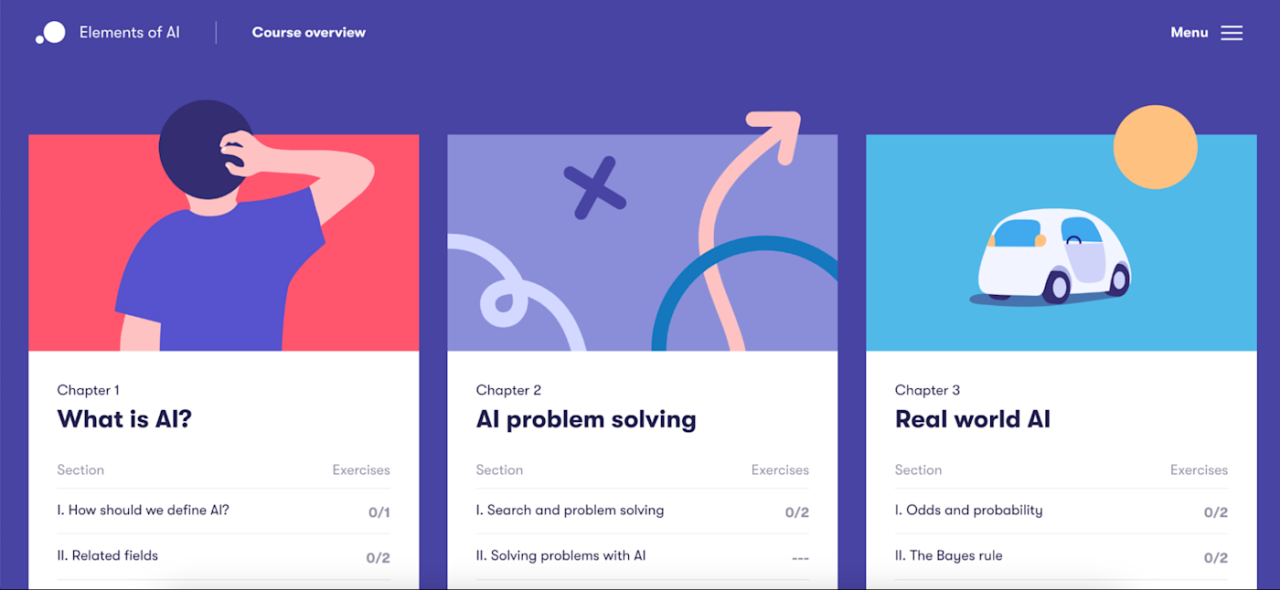
Selecting the appropriate online platform for your AI course is crucial for a positive and effective learning experience. The right platform fosters engagement, provides necessary tools, and facilitates a supportive community, all vital components for successful AI skill development. This section delves into the key factors to consider when making this important decision.
Factors to Consider for Platform Selection
Choosing an online AI course platform is more than just picking a name. Several crucial factors impact the quality of your learning journey. Accessibility, robust learning tools, and a vibrant community are paramount for a successful learning experience.
- Accessibility and Usability: A platform’s accessibility features significantly influence the learning experience. Consider factors like mobile responsiveness, intuitive navigation, and availability of assistive technologies. A user-friendly interface ensures seamless navigation and engagement, regardless of technical proficiency.
- Learning Tools and Resources: The platform should provide a comprehensive suite of tools that enhance understanding. Interactive simulations, coding environments, and access to supplementary materials are valuable resources for practical application. A platform with a wide array of resources promotes deeper learning and skill development.
- Community Engagement and Support: Online AI learning thrives on a supportive community. Active forums, mentorship opportunities, and collaborative projects foster peer-to-peer learning and knowledge sharing. A strong community can provide invaluable insights and support during challenging concepts.
Importance of Community Engagement in Online AI Learning
A thriving online community plays a vital role in the success of any AI course. It’s more than just a forum; it’s a space for collaboration, knowledge sharing, and peer support. Learning from peers and engaging with instructors and experts can significantly enhance understanding and practical application.
- Peer Learning: Sharing experiences and learning from peers’ perspectives is invaluable. Discussions and collaborative projects provide a practical application of concepts and facilitate understanding. Learning from diverse experiences broadens perspectives and encourages a deeper comprehension of complex topics.
- Instructor and Expert Interaction: Access to instructors and experts within the community provides valuable guidance and clarification. Questions can be answered promptly, and personalized feedback can be received, enhancing the learning process. This direct interaction provides an opportunity to receive tailored support.
- Collaborative Projects: Collaborative projects and shared challenges offer an opportunity to apply learned concepts and gain practical experience. Working with peers on real-world scenarios deepens understanding and strengthens practical skills. These collaborations provide an opportunity to apply knowledge in diverse settings.
AI Learning Platform Comparison
A comparative analysis of different AI learning platforms can aid in choosing the most suitable one. The table below Artikels key strengths, weaknesses, and overall user experience for various platforms.
| Platform | Strengths | Weaknesses | Overall User Experience |
|---|---|---|---|
| Platform A | Excellent learning resources, interactive simulations, and strong community engagement. | Limited instructor support, sometimes slow response times in forums. | High |
| Platform B | Extensive course library, diverse learning paths, and good accessibility features. | Less active community engagement, potentially overwhelming for beginners. | Medium |
| Platform C | Emphasis on practical application, hands-on projects, and supportive mentors. | Limited course variety, primarily focused on specific AI areas. | High |
| Platform D | Free access to foundational courses, affordable premium options, and user-friendly interface. | Limited advanced course offerings, inconsistent quality of courses. | Medium |
Last Point
In conclusion, finding the ideal AI course and certification involves a multi-faceted approach. By meticulously evaluating course providers, types, structure, certifications, and pricing, you can make informed decisions aligned with your career aspirations. This guide offers a structured framework to help you choose the right AI educational path, maximizing your learning experience and career prospects. Remember to thoroughly research and compare options to find the best fit for your unique needs.